

Restaurant & Food Delivery Software Development, built for the Friday-night rush and the margins behind it.
We build the software that sits between a hungry customer and a hot plate: point-of-sale, kitchen display screens, delivery dispatch, and inventory that updates itself as dishes are sold. Our clients are operators who are tired of handing 20 to 35% of every order to a marketplace, and who want their online orders, kitchen line and couriers working from one live picture.
From aggregator dependency, to owning your own guest relationships.
A restaurant that sells only through delivery marketplaces can lose up to a third of every ticket, and never learns who its customers are. The operators doing best right now have built their own ordering channel, tied courier dispatch to what the kitchen is really cooking, and connected their inventory to the till.
Projected direct-to-consumer digital restaurant orders by 2027
Guests will happily order straight from a restaurant's own app or site when the rewards are good and the delivery is accurate.
Every order that comes through your own app saves 25 to 30% in platform fees, and the guest's order history lands in your CRM instead of someone else's.
Virtual brands a single cloud kitchen commonly runs from one footprint
Running several brands out of one kitchen only works if the display software paces work by cooking station, not by which app the order came from.
One consolidated kitchen screen stops station bottlenecks and duplicate tickets when the dinner rush hits.
Share of purchased food that never reaches a customer's plate
Ingredient prices move, prep logs get filled in from memory, and shrinkage goes unnoticed until the month-end count. Recipe-level depletion makes it visible as it happens.
When every POS sale deducts its recipe from stock, reorders can trigger before the walk-in runs dry, not after.
The pressures reshaping how restaurants make money.
Taking Orders Back from the Marketplaces
Delivery apps typically keep 20 to 35% of each order, and they keep the customer's contact details too. A branded app and web storefront win back that margin and give you a guest list you actually own.
One Queue for Every Order
A counter with separate tablets for Uber Eats, DoorDash, the phone line and dine-in is exactly where tickets get lost. We pull every channel into one ingestion layer and route each ticket to the right kitchen station.
Couriers Who Arrive When the Food Does
Send a driver too early and they crowd your pickup shelf. Send them too late and the food sits. Prep estimates tied to live kitchen load let us time dispatch to when plating actually finishes.
Stock Counts That Keep Up with the Menu
A weekly count can't keep pace with a busy weekend. Deducting the grams of cheese, protein and produce in every ticket gives managers a running cost-of-goods figure instead of a month-end surprise.
Ordering at the Table Without Waiting for a Server
When you're short-staffed at 8pm, tables wait. QR ordering, split-bill payment and self-order kiosks keep tables turning, and well-timed upsell prompts tend to lift average order value.
Loyalty Programs Guests Actually Use
Paper punch cards rarely survive a wallet. Rewards tied to ordering habits, dietary tags and local offers give guests a reason to come back sooner.
Production-grade food tech for franchises, QSRs and cloud kitchens.
From a point-of-sale that keeps working when the Wi-Fi doesn't, to cold-chain sensors that write your HACCP logs for you, we build distributed software that holds up during the busiest hour of the week.
Unified POS & Payment Terminal Engine
Multi-Station Kitchen Display System (KDS)
Direct-to-Consumer Mobile Ordering & PWA
Multi-Brand Cloud Kitchen & Virtual Brand Hub
Dynamic Last-Mile Delivery Dispatch Engine
Recipe Costing & Inventory Depletion Engine
QR Dine-In Ordering & Instant Pay-at-Table
Franchise Analytics & Store Performance BI
Cold-Chain IoT & Kitchen Equipment Telemetry
Gamified Loyalty & Automated CRM Pipeline
Unified POS & Payment Terminal Engine
A cloud-connected POS with split billing, offline transaction queuing, hardware peripheral support and live terminal sync across the floor.
Engineered for sub-second response times and complete multi-tenant isolation under peak operational loads.
Practical machine learning working inside real kitchens.
We add models to order intake and prep workflows where they cut waste or save a cook's time: forecasting rushes, pacing couriers, checking packed orders and tuning the digital menu.
Weather- and Event-Aware Prep Prediction
Time-series models that read your historical POS data, local events and the weather forecast to estimate how many of each dish you'll sell hour by hour.
Kitchen Pacing and Dynamic ETA Engine
Models that combine ticket state and, where cameras are installed, kitchen vision to predict when plating will finish, so the courier is called at the right moment.
Camera-Assisted Check at the Packing Station
Edge cameras above the pack line that check trays for missing drinks, sauces and sides, and for portions that are off.
Margin-Aware Menu Layout and Item Ordering
Reinforcement-learning experiments on item position, pairings and bundles, constrained by kitchen capacity and how long ingredients will keep.
Omni-Channel Kitchen Prep & Dynamic Dispatch Pipeline.
How online storefronts, in-store QR kiosks, and aggregator webhooks converge into one normalized ticket queue, paced across hot and cold prep stations with zero counter clutter.
Ingestion & Normalize
DoorDash, Uber Eats, branded iOS/Android apps, and dine-in QR orders land in a single webhook gateway. Customer notes and modifiers map to universal internal SKUs.
Station-Split & Pacing
Items split automatically: grill tickets, fryer orders, and cold bar items route to dedicated touchscreen KDS units. Cook timers sync so all components finish simultaneously.
Assembly & QC Check
Packing station display shows full order check. Overhead camera vision checks bags for missing sides and drink cups before bag sealing and receipt stapling.
Timed Driver Hand-off
Courier dispatch triggers dynamically when order is 3 minutes from plating. Couriers walk in as bag hits the warm shelf, slashing curbside wait time by ~8 minutes.
Recipe Depletion & Waste Savings Calculator.
See how replacing periodic manual inventory counts with real-time recipe ingredient depletion and predictive weather-based prep schedules recovers lost food margin.
Proven track record with industry leaders.
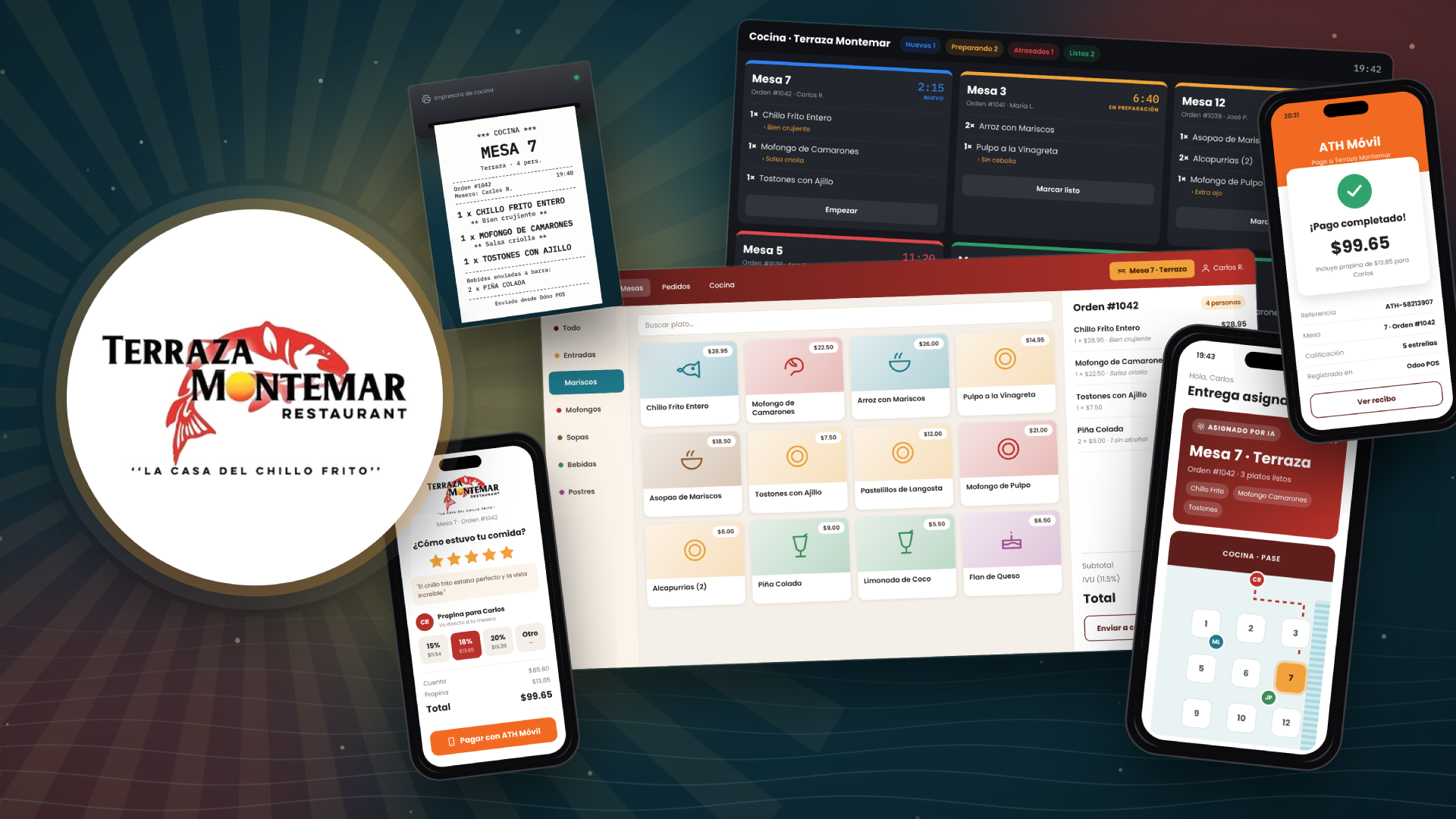
Built by engineers who understand the operational reality of this industry.
We don't ship generic boilerplate software. Our architectures are modeled on the real physical constraints, low-latency protocols, and stringent compliance requirements of your vertical.
Mission-Critical Reliability Under Load
Systems designed with distributed resilience, graceful offline degradation, and high-concurrency event brokers to eliminate outages during peak demand cycles.
Compliance Built into the Core Schema
Architectures natively mapped to Standards we build to: PCI-DSS (card data handled through certified payment processors) and global data privacy standards, ensuring audit-readiness from day one.
Direct API & Hardware Peripheral Sync
Seamless integration with third-party aggregators, legacy ERPs, payment gateways, and hardware telemetry without fragile middleware layers.
Frictionless Ergonomics for Field & Staff
High-contrast, responsive interfaces optimized for rapid keystrokes, touch terminals, and cross-platform mobile access in high-pressure operational environments.
Deterministic AI with Complete Audit Trails
Predictive and generative AI workflows governed by human-in-the-loop review, strict confidence thresholds, and dedicated zero-retention private endpoints.
100% Contractual IP Ownership & Source Code
Every line of code, Docker file, CI/CD pipeline, and database schema belongs unconditionally to your organization from the first commit.
Answers for CTOs, Operations Heads, and Enterprise Founders.
Idea to Market–Ready Product
We turn your idea into a secure, compliant, and test-ready product in weeks, not months.
Inquiry & Scoping
We rapidly decompose requirements, pressure-test commercial viability, and align technical scope before capital is committed.
01 / 06